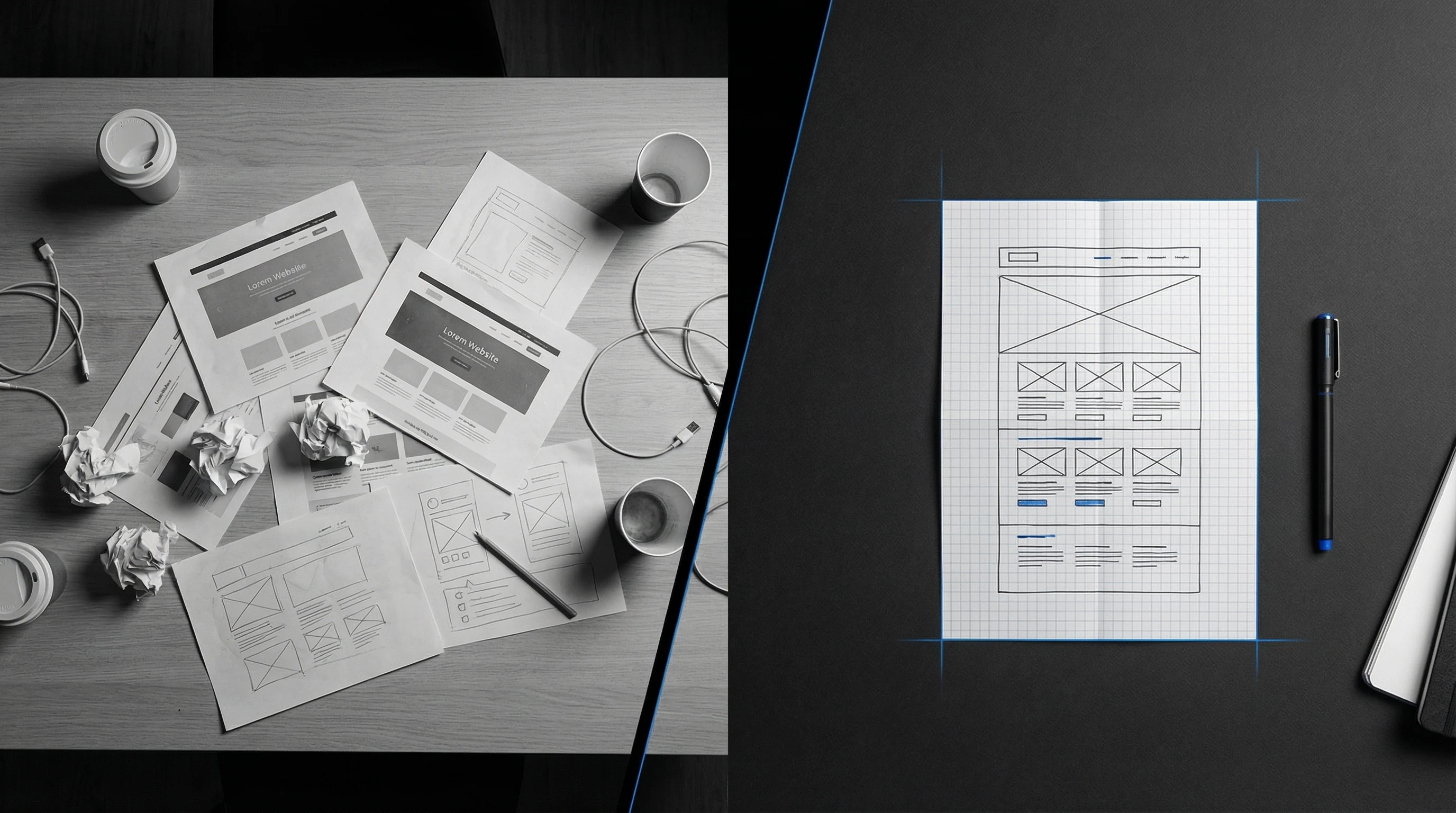
Picking the tech behind your website feels a lot like choosing a car. You could go with a reliable hatchback that gets you from A to B, or you could spec out something built for the exact roads you drive. Neither choice is wrong — it depends on where you're going.
This guide breaks down the real differences between custom coded websites and WordPress so you can make a decision based on your goals, your budget, and where you see your business in three to five years. No sales pitch, just an honest comparison.
Understanding the Fundamentals
What Is a Custom Coded Website?
A custom coded website is built from scratch using HTML, CSS, JavaScript, and modern frameworks like Astro, Next.js, SvelteKit, or Nuxt. Every component is written specifically for your project — no pre-built templates, no plugin Jenga towers.
Think of it as commissioning a bespoke suit. Every stitch is designed for you, fitting perfectly to your measurements. It takes longer to make, costs more upfront, and looks like nothing else on the rack.
What Is WordPress?
WordPress is a content management system powering over 43% of all websites globally. It uses pre-built themes and plugins so you can create a website without writing much (or any) code. It's the IKEA flat-pack of web development — affordable, widely available, and perfectly functional when assembled correctly.
The trade-off? Like flat-pack furniture, you're working within the constraints of what the manufacturer designed. You can customise the cushions, but you can't redesign the frame without a saw.
The Performance Difference
Custom Code: Built for Speed
Custom sites built with frameworks like Astro or SvelteKit ship minimal JavaScript by default. Next.js and Nuxt offer server-side rendering and static generation out of the box. The result: faster load times, better Core Web Vitals scores, and optimised asset delivery through CDN networks.
In practice, a well-built custom site typically loads 2-4 seconds faster than a comparable WordPress site. According to Google's own research, 53% of mobile visitors abandon a page that takes longer than 3 seconds to load. Those seconds matter.
WordPress: Performance Challenges
WordPress sites carry inherent overhead. Every plugin adds database queries. Themes ship with features you'll never use. The platform requires PHP processing on every page load unless you bolt on caching (another plugin). It's like driving a car with the handbrake slightly on — it still moves, but it's working harder than it needs to.
That said, a skilled WordPress developer with proper caching, a lightweight theme, and disciplined plugin management can get respectable performance. It just takes more effort to get there.
Scalability and Flexibility
Custom development gives you unlimited scalability. Need to integrate a headless CMS, connect to a custom API, or build an interaction that doesn't exist in any plugin library? No problem — you write exactly what you need. Frameworks like Next.js and Nuxt handle complex data fetching elegantly, while Astro excels at content-heavy sites with minimal client-side JavaScript.
WordPress scalability depends on the plugin ecosystem. When a plugin exists for what you need, it's fantastic. When it doesn't, you're either hacking a workaround or paying for custom plugin development — which often costs as much as building custom from the start.
Security Considerations
Custom websites have a smaller attack surface. You only deploy the code you wrote, so there are no publicly known vulnerability patterns for attackers to exploit. It's like having a custom lock on your door — a burglar can't just Google how to pick it.
WordPress's popularity makes it the most targeted CMS on the internet. Known core vulnerabilities, plugin security holes, brute-force login attempts, and shared hosting risks are all ongoing concerns. WordPress sites require constant updates — miss one security patch and you're exposed. The platform itself is secure when maintained, but "when maintained" is doing heavy lifting in that sentence.
Cost Comparison: Initial vs Long-Term
Here's where the conversation gets interesting. Custom development costs more upfront — typically R50,000-R500,000+ compared to R15,000-R100,000 for WordPress. That sticker shock sends many businesses straight to WordPress, which is completely reasonable.
But zoom out to a 3-5 year view. Custom sites generally have lower hosting costs (static hosting on Vercel or Netlify vs managed WordPress hosting), fewer ongoing maintenance headaches, and no annual plugin subscription fees that quietly add up. The total cost of ownership often evens out by year 2-3, then tips in favour of custom development.
It's the difference between buying a cheap printer and paying for expensive ink cartridges forever, versus investing in a laser printer upfront and barely thinking about costs afterward.
When WordPress Makes Sense
- Tight budgets under R30,000 — WordPress gets you online fast
- Non-technical teams who need to update content regularly through a familiar interface
- Rapid prototyping to test market fit before committing to custom development
- Blog-heavy, content-first websites where the CMS is the product
- You've already invested heavily in WordPress plugins and workflows
When Custom Code Is the Clear Winner
- Performance-critical sites where every second affects revenue (e-commerce, SaaS, membership)
- Unique user experiences and complex interactions that plugins can't replicate
- Enterprise security requirements where you need full control over the codebase
- High-traffic or rapidly growing businesses that will outgrow WordPress constraints
- Brand differentiation — when your competitors all look like they bought the same theme (because they probably did)
- Long-term 5+ year strategies where total cost of ownership matters more than upfront price
Making Your Decision
There's no universally "right" answer here. WordPress powers some genuinely excellent websites, and custom code powers some genuinely terrible ones. The technology matters less than how well it's executed and whether it matches your actual needs.
Ask yourself three questions: What does my business need in the next 12 months? Where do I want to be in 3-5 years? And honestly — what can I afford right now without cutting corners that'll cost more to fix later?
If you're starting lean and need to move fast, WordPress with a quality developer is a solid choice. If performance, scalability, and long-term ownership cost are priorities, explore custom development with a framework that fits your use case — whether that's Astro for content sites, Next.js for dynamic apps, SvelteKit for interactive experiences, or Nuxt if your team knows Vue.
Whatever you choose, invest in the build quality. A well-built WordPress site will outperform a poorly built custom site every time. The framework is just the foundation — what you build on it is what actually matters.
